How Amelia Earhart’s Legacy Inspired the NIGHT WITCHES
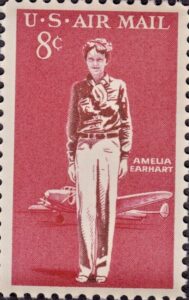
Amelia Earhart stamp
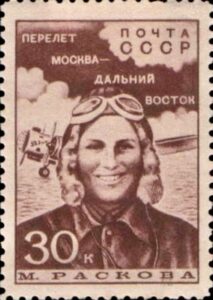
Major Raskova stamp
It’s October 2026 and I’m watching live feed of an expedition in search of Amelia Earhart’s lost plane. For years, I’ve been intrigued by the mystery of Earhart’s disappearance over the Pacific Ocean, July 2, 1937 during her attempt to be the first woman to circumnavigate the world. Now, I feel like I’m on the cusp of history as I watch the Earhart expedition, organized by the Purdue Research Foundation and the Archaeological Legacy Institute, launch from Tarawa in the Republic of Kiribati on the sixth of October.
The anomaly that ignited this search, the “Taraia Object,” seen in satellite images since 2020, is the indisputable shape of an airplane. Other reasons for cautious optimism include bones discovered in 1940 that appear to be from a woman of Earhart’s size, artifacts found in the 1930s such as a woman’s show, a compact case, and a freckle cream jar, and a photograph captured on the island’s reef, three months after the plane vanished, which closely resembles the plane’s landing gear.
My interest in Earhart recently flourished when I began to research my latest novel, The Night Witches, about the first female combat aviation regiment in history. Right away, it became clear that this unprecedented night bomber aviation regiment might never have taken flight without the intrepid female American pilot. Earhart garnered international attention from women around the world, including young Soviet females who kept newspaper articles about Earhart’s record-breaking flights. Her success helped them see that gender was not a barrier to flying.
Earhart married publisher George Putnam in 1931, but this didn’t stop her from craving the space and time to pursue her dreams. On the morning of her wedding day, she wrote the following to Putnam: “I cannot guarantee to endure at all times the confinement of even an attractive cage.”
One year later, Earhart set the world’s record for longest straight-line distance for a female pilot, flying 3,939 kilometers.
_________
In 1933, a year after Earhart’s world record, Marina Raskova became the first female navigator in the Soviet Air Force. She was also the first woman to teach navigation at Zhukovsky Air Academy in 1934. Then, with an eye to surpassing Amelia Earhart’s long-distance record, Marina, a divorced single mother, was the navigator for a female-only long-distance flight across the Soviet Union in 1938. Marina, Polina Osipenko and Valentina Grizodubova set a new world’s record for women flying 5,947 kilometers in straight-line distance.
After this historic flight, Raskova was often called the ‘Russian Amelia Earhart’.
In fact, thousands of girls, including those in The Night Witches, might not have had the opportunity or impetus to fly if not for the heroic aviatrixes they revered, starting with Amelia Earhart.
_______
After five days at sea, the Taraia Object Expedition has reached the tiny island, Nikumaroro, part of the Phoenix Islands Protected Area. But heavy winds and rain keep the team from landing to begin their research. For three days, they wait out the storm. With a limited amount of fuel and food, their expedition cannot be extended. Time is critical.
I don’t want to think of the 14-member search team turning back without proving their hypothesis, that the Taraia object, seen in satellite images since 2020, is Earhart’s fallen Lockheed Electra 10-E aircraft. Interestingly, Earhart and Purdue University’s relationship goes back to Earhart’s fated 1937 flight, as explained in a press release from the university: “The Purdue Research Foundation originally funded Earhart’s Lockheed Electra through the Amelia Earhart Fund for Aeronautical Research. Earhart intended for the aircraft to be returned to Purdue following completion of her historic flight.
“Earhart came to Purdue in 1935 and spent two years at the university as a women’s career counselor and advisor in the aeronautics department. Her Purdue connection helped make possible the development and acquisition of the Electra she flew on her round-the-world attempt.”
Not only was Earhart a role-model for thousands of young women she also helped establish The Ninety-Nines, an international organization for female pilots, which led to a network of mentoring, scholarships, and support. In addition, she tirelessly lobbied the Federation Aeronautique Internationale (FAI) to create world altitude, speed, and endurance records specifically for women.
________
Motivated by Amelia Earhart and Marina Raskova’s record-setting flights, Soviet women flocked to flying lessons at the OSOVIAKHIM (Society for Promotion of Defence, Aviation, and Chemical Development. Most carried newspaper photographs and stories about the famed women aviators.
Created in 1927, the Society nurtured military skills with its huge network of shooting galleries, flying clubs, parachute-stands and airfields. By 1931, officials declared the Society had 11 million members. Shortly thereafter, when the party resolved to erase barriers between men and women, the Society made all activities available to females, and began using genderless language, such as ‘fighters’, ‘Soviet youth’, and ‘young Soviet people’.
“In 1935, the Society had at its disposal 122 Flying Clubs and more than 1,000 parachute stands around which skydiving circles were organised,” Anna Krylova writes in, ‘Stalinist Identity from the Viewpoint of Gender: Rearing a Generation of Professionally Violent Women Fighters in 1930s Stalinist Russia’. “… 3,500 people graduated from flying clubs and became certified pilots; in the first half of 1936, 10,500 people jumped out of planes.”
Although the OSOVIAKHIM was supposed to provide gender-neutral opportunities, women found it difficult to be approved to train for aviation roles. Even after the record-setting Rodina flight. Even after the trio became the first women to receive Hero of the Soviet Union, the highest award possible, sparking a nation-wide interest in aviation from women across the Soviet Union.
Reality opposed ideology.
Until Germany invaded the Soviet Union.
Then, Marina successfully made a case for three female aviation regiments.
“The Soviet woman,” Marina said in a speech written to encourage women to join the fight against the Nazis, “she is the hundreds of thousands of drivers, tractor operators and pilots who are ready at any moment to sit down in a combat machine and plunge into battle.”
Captivated by Marina’s words, women flocked to Air Force headquarters to join. The Night Witches was one of three regiments created by Marina. It was the only all-female regiment. It was her greatest legacy yet her military obituary does not even mention any of her unprecedented regiments.
_________
Knowing there was a chance she might not survive her 1937 flight around the world, Amelia wrote a letter to her husband. After she vanished over the ocean, Putnam read her words: “Please know I am quite aware of the hazards. I want to do it because I want to do it. Women must try to do things as men have tried. When they fail, their failure must be but a challenge to others.”
Unfortunately, the Taraia Expedition discovered that the plane-shaped object was nothing more than trees and debris that had settled into the lagoon at Nikumaroro. “We set out to test a hypothesis, not to guarantee a particular result, and we followed the evidence to the end,” said Steve Schultz, Purdue general counsel and expedition member. But this does not mean the search has been abandoned. Far from it.
“Amelia Earhart never gave up,” Schultz said. “She kept pushing boundaries and flying into the unknown. That same fire fuels our search. She kept flying, and we will keep searching.”